Andalucía is hot. By that I mean I’m “melting into the sidewalk while pretending it’s a vibe”. That’s why cold soups aren’t just culinary traditions: they’re coping mechanisms. Humble, simple, nutritious, and low-key genius: hydration + flavor + vitamins = survival strategy disguised as a drink or lunch. These recipes have fed generations, sparked regional debates, and made more than one tourist cry from joy.
They also represent some of the most emblematic dishes in all of Spain, especially during the brutally toasty summer months. There isn’t a village or abuela without their own “secret” recipe, passed down like sacred scrolls. But here’s the twist: Are there really differences between the Porra de Antequera and Salmorejo from Córdoba? Or between Gazpacho and Málaga’s mysterious Zoque? The answer, like a properly emulsified soup, is complex.
Ask a chef in Córdoba, a fisherman in Cádiz, or a grandmother in Jaén, and you’ll get different answers. As Málaga food historian Esperanza Peláez puts it: “Gazpacho comes from posca, the drink of Roman legionaries—water, vinegar, herbs. Everything since then has evolved in its own direction. But in the end, it’s all the same.”
Oil, vinegar, salt, garlic and bread: These are the basics of all Andalucian sopas. Then as the times change, the formulas shift, ingredients swap in and out, and flavors are tuned by province and preference. According to Ferran Adrià, there doesn’t exist a recipe that is exactly the same older than 100 years. In fact, the OG “gazpacho” in Roman times never had tomatoes, as they were brought over from the New World in the last few centuries. The true constant? They’re all a delight to eat in the dead of summer, and nutritious to boot.
Now let’s take a tour through every cold Andalusian soup — classics, cult favorites, and underrated icons. Yes, even the ones that don’t show up on menus unless you know how to ask. Ready your spoons. It’s about to get muy fresco.
1. Gazpacho Andaluz

The most famous Horseman (or caballero, if you will) of the Andalucian cold sopas. Every Spaniard knows their grandmother’s recipe by heart. Classic gazpacho is a chilled blend of tomato, cucumber, bell pepper, garlic, vinegar, stale day-old bread, and EVOO (the cornerstone of a good gazpacho), poured like a spa day for your parched taste buds.
According to the Academia Andaluza del Gazpacho (yes, that’s a real thing and yes, I love that it exists), the right way to make it goes like this: wash, chop, toss into a container with water and salt, and let it all marinate like it’s prepping for a first date. After about an hour and a half of this veg spa treatment, hit it with a hand blender, strain through a fine-mesh sieve for silky smoothness, and chill it in the fridge for as long as your willpower allows.
Traditionally, the soup was made in a mortar and pestle with hand-pounded garlic to keep the ingredients cold and flavors intact. But now refrigerators exist (can I get a Hallelujah?) and using a blender is a surefire way to avoid sweating from an unnecessary arm workout.
And here’s the wild part: gazpacho isn’t just tasty, it’s basically a superfood in disguise. Packed with vitamin B, antioxidants, and enough fiber and water to fill you up without weighing you down, you can keep that hot girl summer bod going all season long. It’s also a natural isotonic drink, so it replenishes minerals lost from doing physical things…like sweating profusely under the summer sun.
2. Salmorejo Cordobes

The second of the four Horsemen is Gazpacho’s creamy cousin, who rolls with a no-nonsense attitude: it’s got more bread, and no water, cucumber, or bell pepper. Getting right to the point, salmorejo is all about tomatoes and EVOO, so the quality better be phenomenal. The ideal bread is crusty and dense, with as little water content as possible. Garnish with chopped jamón and diced hardboiled egg for a sprinkling of protein to satisfy the body nutritional requirements. You can leave it off if you’re vegan, but I’m pretty sure that word doesn’t exist in the Andaluz dictionary.
The result is a silky, coral-pink soup that holds a spoon like it’s posing for a Renaissance still life. Although served across the entire region, Cordoba takes their soup so seriously, that they even have a Salmorejo National Congress (I think I’m seeing a pattern here…). Democracy may be fragile, but the salmorejo lobby is thriving.
3. Porra Antequerana

Horseman #3 of the Cold Soupocalypse hails from Antequera, where I imagine they were able to grow some red bell peppers better than Cordoba, so decided that it was appropriate to throw into the mix. Porra takes its name from the mallet or baton that rural people used to crush the ingredients in a mortar.
Porra is a close sibling of salmorejo, with an extra flair of red bell pepper and wine vinegar for a tangy boost, giving a variation in color and consistency. Usually topped with shavings of hardboiled egg, jamón or tuna…and literally any leftovers you have at home, because that’s kind of the point of this soup.
4. Zoque Malagueño

Ah, Zoque. The misunderstood and oft-neglected middle child of the cold soup family (which, to be fair, is really quite extensive). While gazpacho and his cousins get all the fame, zoque quietly shows up to the party with extra flavor, extra thickness, and zero apologies. Native to Málaga, this lesser-known soup is basically a rich red-hued remix of the gazpacho.
What sets it apart? First, the color palette. One day several hundred years ago, someone woke up and chose to throw every product colored deep red and orange into a bowl, namely tomatoes, peppers, and carrots. Second, the texture — it’s velvety, dense, and capable of clinging to toppings like shrimp or jamón. Some locals even serve it with grapes, because the fruity plot twist is Malaga’s signature move.
The name zoque has Arabic roots—“suqat,” meaning waste or scraps—because this soup was originally a way to use up stale bread and leftover veggies. Today, thanks mostly to the tourism boom, it’s a rustic-luxe masterpiece. Traditionally strained for silkiness, it’s often served chilled before a fried fish feast or as a standalone appetizer that low-key steals the whole show.
Want to get even more niche? In the Málaga town of Benamargosa, there’s a version of zoque made without tomatoes (gasp!) and instead used “cascarúos,” a type of rustic lemon from the Citrus medica family, also called pear lemons. Imagine lemonade’s introverted cousin blended into savory soup form. Is it a soup? Is it a sauce? Is it a vibe? Ya no importa.
5. Ajoblanco

Here we finally have a departure from all the tomatoes with the fourth Horseman. In fact, this elegant yet mysterious white soup is actually the father of the gazpacho, because its roots are carried from Roman times when soups were made with what people had on hand, namely bread crumbs, garlic, olive oil, vinegar, salt, water.
It was only in the 16th century that tomatoes arrived from the New World, eventually introduced to the common Spanish cuisine, and the now famous red gazpacho was born in the 19th century. Food historians also theorize that the Arabs introduced the addition of almonds to original carb-loaded Roman recipe, as almonds are heavily featured in their cuisine. Now this uber-traditional soup is deeply entrenched in all of al-Andaluz.
Ajoblanco also happens to be my personal favorite Andalucian cold soup: a cream of blended almonds, garlic, bread, EVOO, and usually grapes or melon as garnish. One of the best versions I’ve ever tasted included slices of smoked eel and diced apples. Regardless, every bowl is a dream.
6. Mazamorra Cordobesa
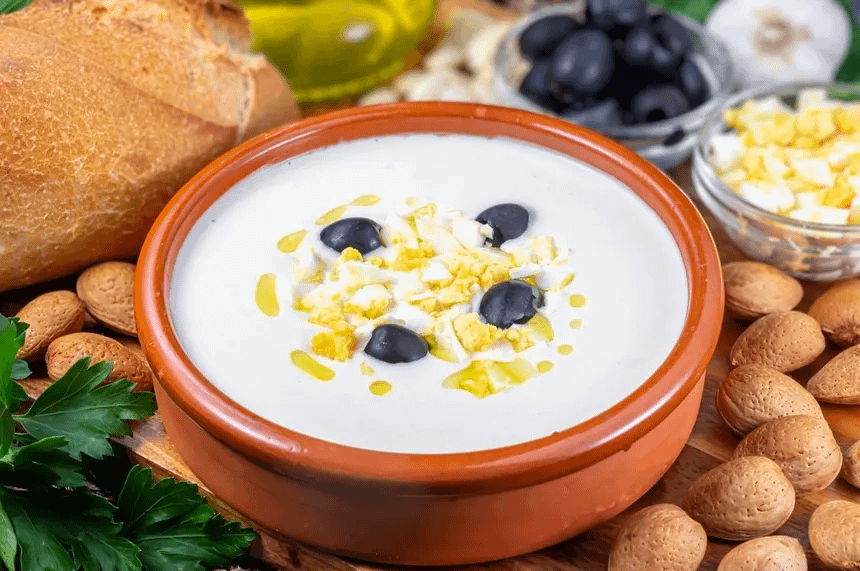
The introvert of the Andalusian cold soup family—quiet, low-key, and then bam, it steals the show. While everyone flocks to salmorejo like it’s the headliner at a food festival, mazamorra waits patiently in the wings, waiting to be discovered. As they say in Córdoba: el salmorejo se busca, la mazamorra se encuentra—you go looking for salmorejo, but mazamorra? It finds you.
Originally made with just bread, garlic, olive oil, vinegar, and salt, this soup has the same roots as ajoblanco, but the toppings make it ready for a fiesta. The typical garnishes are boiled egg and black olives, but you can also serve it with pieces of fried bread, fried and salted almonds, raisins, fish roe, pieces of avocado, and cubes of jamon serrano.
Once upon a time, mazamorra was considered too homey for restaurant menus. Dishes like this were overlooked because people didn’t go out to eat the same thing they could make at home. Fast forward to the tourist boom, and now mazamorra is everywhere, dressed up and glowed up — often updated for modern palates but still rooted in tradition.
7. Gazpachuelo Malagueño

I left this soup for last because it’s almost cheating to add to this list. Not to be confused with the OG gazpacho, the gazpachuelo is technically a hot soup. But come summer time (which feels like 9 months out of the year, let’s be honest), you’ll find room temperature or even cold versions of it served in restaurants everywhere.
Málaga’s fisherman soup has humble origins, and the base mainly comprises of fish broth, mayo, garlic, and potatoes. Over time, it evolved to include shrimp, clams, or even rice. The variety is as endless as the number of villages littered along the Costa del Sol. While traditionally served warm, modern versions get the cold treatment and make for a silky, briny refresher that still feels oddly comforting.
We’ve gone deep into Andalusian cold‑soup land, from the famous gazpacho to the semi‑obscure but personal favorite ajoblanco, ending with a modern cool twist to the humble fish soup gazpachuelo. Seriously, who thought you could do so much with stale breadcrumbs and water?
Andalucía may be blazing, but these soups are your chill squad, blending history, heat-busting hydration, and deep flavor. Each village or province tweaks ingredients like a DJ remix, each soup a testament to local creativity. Whether you’re grazing in Cordoba or sunning in Malaga, there’s a cold spoon with your name on it. Taste every variation, mix‑and‑match toppings, and try your best to keep order of how many glasses of tinto de verano you spilled. Salud and stay chill!